

Personal Statement:
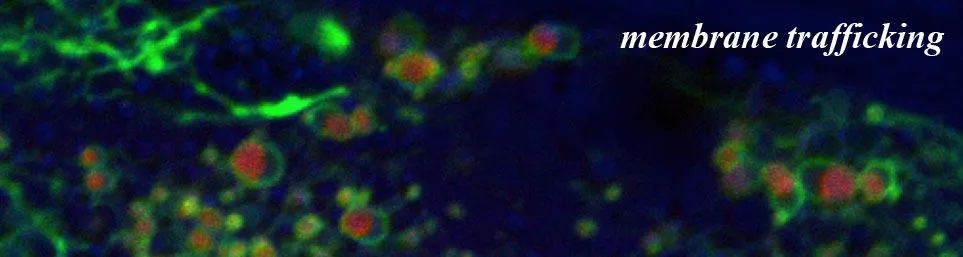
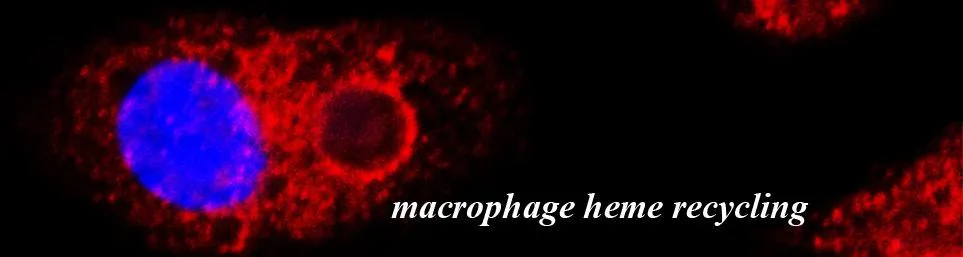
Heme is a biological paradox: an iron-containing hydrophobic cofactor essential for oxygen transport, energy metabolism, and signaling, yet dangerously cytotoxic when unshielded. For more than six decades, a central problem in cell biology has remained unresolved: how eukaryotic cells import heme, move it across membranes, traffic it between organelles, and deliver it with precision to hemoglobin and other hemoproteins.
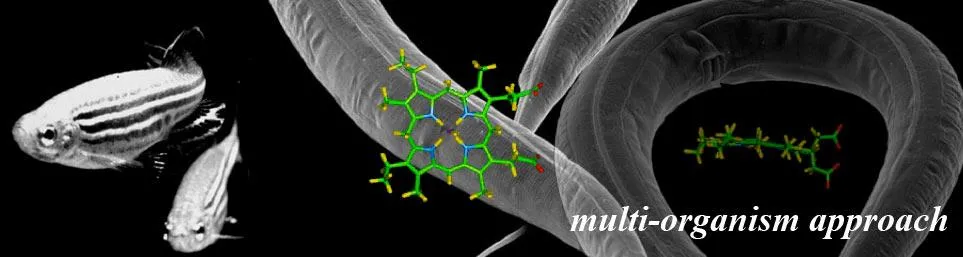
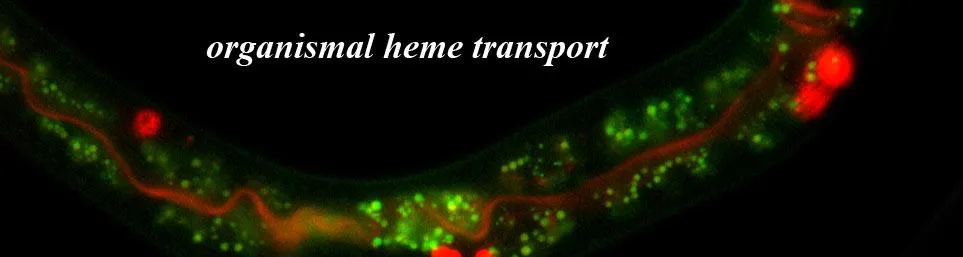
The mission of my research program is to close these long-standing gaps by defining the genes and pathways that govern heme transport and intracellular trafficking. The Hamza Lab pioneered a multi-organismal strategy centered on the genetic model C. elegans, a microscopic transparent animal that cannot synthesize heme and must acquire it from its environment. This unique dependency provided a powerful entry point to uncover conserved heme-handling machinery.
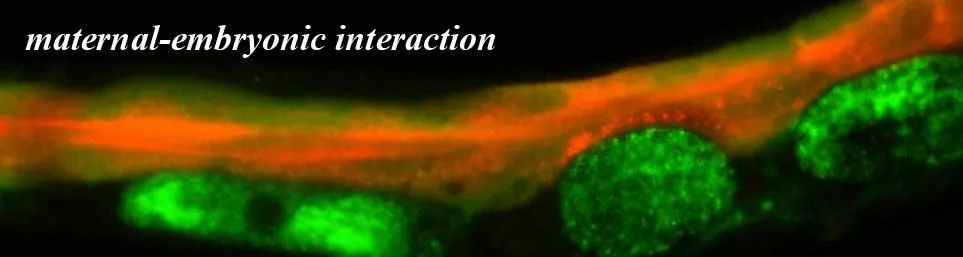
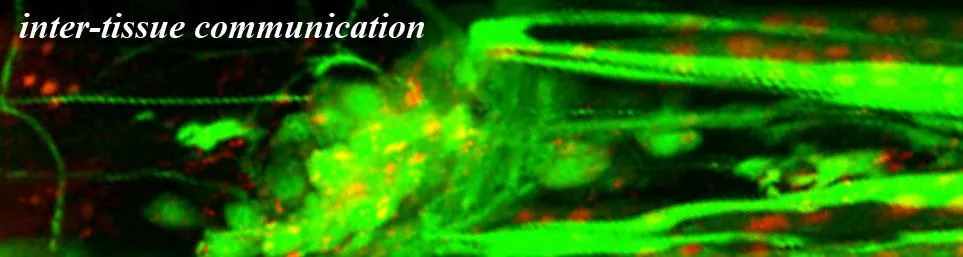
Using this platform alongside zebrafish mice, and human systems, we identified HRG-1 as the first eukaryotic heme importer, establishing a conserved gateway for heme entry from worms to humans. We subsequently defined systemic distribution mechanisms, including intestinal export via HRG-3 and ABCC5/MRP5, and uncovered inter-organ communication circuits that coordinate organismal heme homeostasis.
Beyond fundamental physiology, our work reveals shared vulnerabilities in medically important heme-auxotrophic pathogens such as hookworms, filarial worms, and Leishmania, which rely on host-derived heme for survival. By integrating genetics, cell biology, biochemistry, and physiology, our long-term goal is to build a molecular blueprint of heme trafficking that informs new approaches to anemia, hemoglobin disorders, and host-pathogen competition.
Education:
- 2021, 2023 Visiting Professor, University of Torino, Italy
- 2019-2020 Sabbatical, Genetics and Molecular Biology Branch, NHGRI/NIH; Dr. David Bodine
- 2010-2011 Sabbatical, Translational and Functional Genomics Branch, NHGRI/NIH; Dr. Paul Liu
- 1997-2002 Postdoctoral Fellow, Washington University School of Medicine; Mentor: Dr. Jonathan Gitlin
- 1991-1997 Ph.D., Biochemistry, SUNY at Buffalo School of Medicine; Mentor: Dr. Mark O'Brian
- 1985-1991 B.Sc. & M.Sc., Biochemistry, University of Bombay, India
Honors:
- 2024 CAPES Print -Fiocruz Visiting Professor Scholarship, Fiocruz, Bahia, Brazil
- 2022 NIH Director’s Wednesday Afternoon Lecture Series (WALS) Lecturer
- 2019 Chair, Gordon Research Conference, Cell Biology of Metals
- 2018 Erasmus+ International Credit Mobility Fellow, European Union (Lund University, Sweden)
- 2018 Chair, Gordon Research Conference, Chemistry and Biology of Tetrapyrroles
- 2017 Fellow, American Association for the Advancement of Science
- 2012-16 Standing Member, Integrative Nutrition and Metabolic Processes Study Section, NIH
- 2012 Fellow, Japan Society for the Promotion of Science
- 2011 Faculty Excellence Award, AGNR, University of Maryland
- 2011 Excellence in Research, 44th Annual Alumni Awards Celebration, AGNR, University of Maryland
- 2010 Kirwan Faculty Research and Scholarship Prize
- 2010 Best Inventor Pitch, Professor Venture Fair, University of Maryland
- 2006 Junior Faculty Excellence Award, AGNR, University of Maryland
- 2005 Outstanding Invention of 2004, University of Maryland
- 2003 Member of Sigma Xi Scientific Research Society
- 2002 NIH K01 Research Career Development Award, NIDDK
- 2001 Top 30 Outstanding Alumni, Canada World Youth, Montreal, Canada
- 2000 NIH Post-Doctoral NRSA Fellowship, NHLBI
- 1987 Duke of Edinburgh's Award Silver Standard
Professional activities (advisory panels, editorial boards, consulting):
Grant review panels:
NIH, Integrative Nutrition and Metabolic Processes (INMP) Study Section, NIH, 2005, 2006, 2010, 2016, 2020; 2011, AARA RC1, AARA R15, Special Emphasis Panel – ZRG1 EMNR-H, EMNR-P; NSF, Metabolic Biochemistry Study Section, 2003, 2004, 2006; Telethon Foundation (Comitato Telethon Fondazione ONLUS), Milan, Italy, 2003, 2006, 2015, 2016; Biotechnology and Biological Sciences Research Council (BBSRC) UK, 2006, 2014, 2015, 2018; March of Dimes 2010; Research Foundation - Flanders (Fonds Wetenschappelijk Onderzoek - Vlaanderen, FWO), Belgium 2012; Israel Science Foundation 2013; Barth Syndrome Foundation 2015.
Manuscript Reviewer:
Aging Research Reviews; American Journal of Hematology; Biochimica et Biophysica Acta; Blood; BMC Biology; BMC Cell Biology; BMC Genomics; Cell Metabolism; Cell Reports; Cell Stem Cell; Current Biology; eLife; Eukaryotic Cell; Experimental Biology and Medicine; Experimental Cell Research ; Experimental Parasitology; FASEB Journal; FEBS Letters; Food and Chemical Toxicology; Frontiers in Pharmacology; Frontiers in Immunology; Genetics; Genome Biology; Hematology; International Journal for Parasitology: Drugs and Drug Resistance; Journal of American Chemical Society; Journal of Biological Chemistry; Journal of Biological Inorganic Chemistry; Journal of Clinical Investigation; Journal of Molecular Biology; Journal of Nutrition; Molecular Metabolism; Nature; Neuroscience and Biobehavioral Reviews; Open Biology; Pest Management Science; PLoS Biology; PLoS Computational Biology; PLoS Genetics; PLoS ONE; PLoS Pathogens; Proceedings of the National Academy of Sciences USA; Science; Science Translational Medicine; Scientific Reports; The American Journal of Clinical Nutrition; The American Journal of Physiology - Gastrointestinal and Liver Physiology; Toxicological Reports; Translational Research.
Editorial Duties: PNAS, eLife.
Editorial Board: eLife; Blood (Red Cells & Iron), HemaSphere
Founder and President: Rakta Therapeutics, Inc. (Incorporated: Sep 26, 2011).
Patent: Compounds for treating parasitic infections. Inventors: Iqbal Hamza, Fengtian Xue. Patent number: 10227320; Filed: May 6, 2016, Date of Patent: March 12, 2019
The University of Maryland
About the University of Maryland, Baltimore
Opened in 1807, the University of Maryland, Baltimore (UMB) is Maryland’s public health, law, and human services university, dedicated to excellence in education, research, clinical care, and public service. UMB enrolls over 7,200 students in six nationally ranked professional schools — dentistry, law, medicine, nursing, pharmacy, and social work — and an interdisciplinary Graduate School. The University offers 86 doctoral, master’s, baccalaureate, and certificate programs and confers most of the professional practice doctoral degrees awarded in Maryland.
About the University of Maryland, College Park
The University of Maryland, College Park was founded in 1856. Today, as the flagship of the state's 13-campus university system, University of Maryland, College Park is home to more than 41,000+ students, 4,200+ faculty, and 250 academic programs. UMD is ranked No. 10 among public institutions for research and development spending and No. 16 overall in the National Science Foundation's Higher Education Research and Development Survey. UMD is ranked No. 19 among public research universities and No.15 among U.S. public institutions ranked as Best Global Schools by U.S. News & World Report.